How to Choose the Right Omega-3
A practical checklist from a clinical dietitian
Why omega-3 matters: the essentials
Omega-3 consists of two essential polyunsaturated fats that perform critical functions in your body:
- EPA (eicosapentaenoic acid) — supports anti-inflammatory effects, heart health, and mood stability
- DHA (docosahexaenoic acid) — essential for brain development, vision, cognitive function, and healthy aging
Why is omega-3 important for prevention?
Omega-3 is one of the most researched tools in preventive medicine. Here's the honest picture:
For primary prevention (healthy people without heart disease), the VITAL and STRENGTH trials show mixed results for heart health. The reality: omega-3 is not a magic pill for preventing heart disease.
However, for secondary prevention (people with existing conditions), lowering triglycerides, brain health, mood stability, pregnancy, and healthy aging — the evidence is extremely strong.
Who really needs omega-3?
- Pregnant and nursing mothers: DHA is critical for fetal and infant brain development
- People with mood disorders: EPA has an antidepressant effect confirmed by meta-analyses
- People with chronic inflammation: arthritis, autoimmune conditions
- People with elevated triglycerides: high-dose EPA is proven to lower triglycerides
- Those who eat little fish: a diet low in fatty fish is a strong indication for supplementation
- People over 40: healthy brain aging, prevention of cognitive decline
Bottom line: omega-3 is not a cure-all, but one of the few preventive medicine tools with solid scientific backing for specific health goals.
What dose and EPA:DHA ratio you need
Different health goals require different EPA and DHA ratios. Here's a clear breakdown:
General health and prevention
Ideal if you eat fish infrequently and want to support overall brain, heart, and joint health.
Pregnancy and breastfeeding
DHA is critical for fetal brain and vision development. Start ideally before week 20. EBCOG recommendations (2024): this dose reduces preterm birth risk by 42% (before 34 weeks).
Mood, stress, and depression
EPA has shown antidepressant effects in meta-analyses.
Chronic inflammation and joint health
EPA has anti-inflammatory action in arthritis conditions.
High triglycerides
High-dose EPA is proven to lower triglycerides. Requires physician consultation.
General dosing safety principles
| Dosage Level | Range | Safety |
|---|---|---|
| Basic prevention | 500–1000 mg EPA+DHA | Completely safe without monitoring |
| Targeted therapy | 1–3 g EPA+DHA | Safe with normal health |
| High dose | 3–5 g EPA+DHA | Requires medical supervision |
| Above maximum | > 5 g EPA+DHA | Not recommended |
Checklist: how to evaluate a supplement in 7 steps
Use this checklist in a store or online. Each step earns you additional points.
Turn the package over: are EPA and DHA listed separately?
You should see two numbers: "EPA ... mg" and "DHA ... mg". If only "Fish Oil 1000 mg" — that's a red flag. You don't know what you're buying.
Calculate actual dose: EPA+DHA ≥ 500 mg per serving?
Add up EPA + DHA. Pay attention to Serving Size — often it's 2 or 3 capsules, not 1. Below 500 mg is a waste of money.
Check the form: TG or rTG listed on the package?
TG (triglyceride form) — natural, like in fish. rTG — concentrated TG. Both are good. EE (ethyl esters) — chemical form, it works but is less effective.
Find the source: small fish or algae?
Best: anchovies, sardines, capelin. Good option: microalgae. Questionable: large fish (accumulate more metals).
Is there independent testing: IFOS, ConsumerLab, NSF?
IFOS (International Fish Oil Standards) — international standard, strictest purity testing. ConsumerLab — independent US laboratory. NSF — less strict than IFOS.
Transparency: is a batch analysis certificate available?
Professional brands publish batch analysis certificates on their website, accessible by batch number on the package.
Packaging: dark bottle, vitamin E, expiration date?
Omega-3 oxidizes in light and heat. A dark bottle protects it. Vitamin E (tocopherol) is a preservative. A recent date is better.
How to interpret your results
| Total Points | Rating | What it means |
|---|---|---|
| 10–12 | Excellent choice | Professional product. Buy with confidence. |
| 7–9 | Good product | Reliable choice with minor gaps. |
| 4–6 | Some concerns | Works, but consider alternatives. |
| < 4 | Keep looking | Critical gaps. Not recommended. |
Green and red flags
Green flags (BUY!)
Red flags (DO NOT BUY!)
What package terms mean: a reference guide
| Term | What it means |
|---|---|
| EPA | Eicosapentaenoic acid — anti-inflammatory effects, mood health |
| DHA | Docosahexaenoic acid — brain development, vision, cognitive function |
| TG | Triglyceride form — natural, like in fish, best absorption |
| rTG | Re-esterified triglycerides — TG but concentrated |
| EE | Ethyl esters — chemical form, less effective than TG |
| IFOS | International Fish Oil Standards — strictest independent purity testing |
| ConsumerLab | Independent US laboratory for supplement testing |
| NSF | US national standard, less strict than IFOS |
| GOED | Global Organization for EPA and DHA — omega-3 standards |
| GMP | Good Manufacturing Practice — production standard |
| Certificate of Analysis | Document showing actual levels of active substances and purity |
| TOTOX | Total Oxidation Value — oxidation indicator. Lower is better. IFOS ideal < 26 |
Common mistakes people make
Regular fish oil contains 30–35% pure omega-3. From 1000 mg only ~300–350 mg is EPA+DHA. Always check EPA and DHA separately in milligrams!
Price doesn't always reflect quality. Some expensive brands lack IFOS, while budget options are IFOS-certified.
Above 3 g EPA+DHA daily is a high dose. Megadoses of pure EPA (> 2 g daily) are linked to arrhythmia risk. Stick to recommended ranges.
ALA (alpha-linolenic acid from flaxseed) converts to EPA in less than 8%, to DHA in less than 4%. It's a supplement, not a replacement. Vegans: choose microalgae with direct DHA/EPA.
Omega-3 oxidizes in light and heat. After opening — refrigerate, especially in warm climates.
The package may show "EPA 500 mg" but that's per 2 capsules, not 1. Always check serving size.
Safety: what you need to know
For most people, omega-3 is safe
Normal preventive doses (up to 3 g EPA+DHA daily) don't cause problems. Here's what to consider:
- Blood thinners (warfarin, DOACs, aspirin): omega-3 may enhance the effect. Consult your doctor, but usually safe.
- Bleeding disorders: high doses may increase bleeding. Check with your doctor.
- Cod liver oil: contains vitamin A. Can be dangerous in pregnancy at high doses. Choose fish muscle oil instead.
- Fish allergy: fish-based omega-3 won't work. Choose microalgae.
Cancer: what the science says
Omega-3 and cancer data depend on cancer type, treatment stage, and specific protocol. Key facts:
- During chemotherapy: taking omega-3 supplements must be discussed with your oncologist. There are preclinical findings (JAMA Oncology, 2015) suggesting omega-3 may reduce effectiveness of platinum-based drugs (cisplatin). This data comes from animal models and hasn't been confirmed in human clinical trials — but requires caution.
- Nutritional support in cancer: per ESPEN guidelines (2021), omega-3 is not an absolute contraindication in oncology. In patients with weight loss and/or appetite loss, they can be used as part of nutritional support — but strictly under doctor supervision.
- After treatment completion: omega-3 is usually beneficial. A Mediterranean diet rich in fish is associated with better outcomes in cancer survivors (American Cancer Society). Dietary omega-3 (from fish) shows more convincing data than supplements.
Algorithm: do I need an omega-3 supplement?
If yes and you have no specific goals — you may get enough from food. But for targeted prevention (brain over 40, mood) supplementation can help even with a good diet.
If yes — supplementation is recommended. Dosage depends on your goal.
A supplement is a good choice. Preventive dose: 500–1000 mg EPA+DHA daily.
Supplementation is important. Choose microalgae (direct DHA). Dose: 200–400 mg DHA daily.
DHA is key for the brain. 300–500 mg DHA daily (+ EPA) as part of a healthy aging program.
What you can buy in the Czech Republic
The Czech market is well-developed. Quality omega-3 supplements are available through iHerb.cz, local pharmacies, or European retailers.
Examples of supplements meeting the criteria
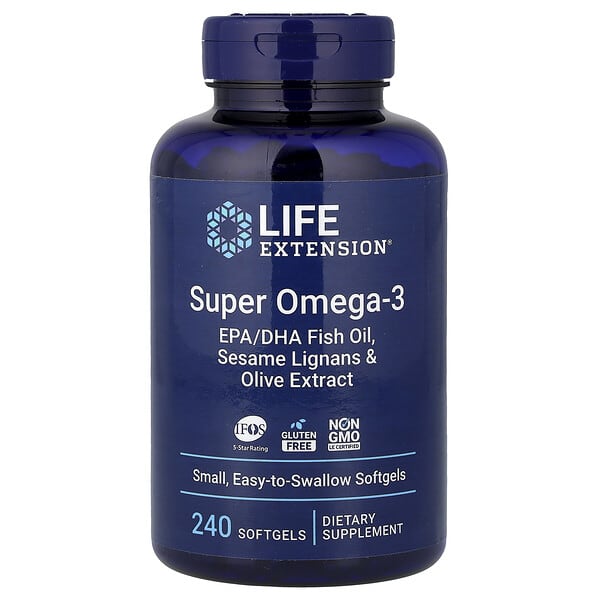
Where to buy: iHerb.cz
- IFOS 5 stars — maximum independent verification
- Excellent EPA:DHA ratio (1.4:1)
- TG form, one capsule = complete daily dose
- Vitamin E as preservative
- Analysis certificate available
- Higher price, but quality justifies it
- Requires refrigeration after opening
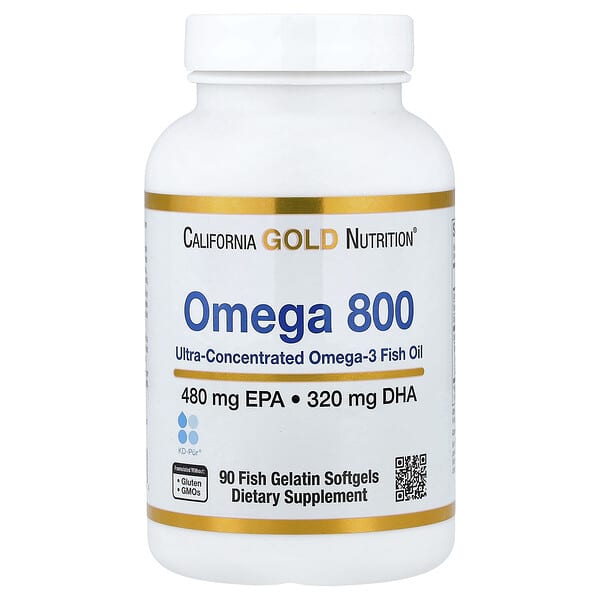
Where to buy: iHerb.cz
- IFOS-certified kd-pür® raw material (KD Pharma, Germany)
- TG form — maximum bioavailability
- 80% omega-3 concentration — one of the highest on the market
- 1 capsule daily — complete preventive dose
- Excellent value for money
- Available only on iHerb (not in local pharmacies)
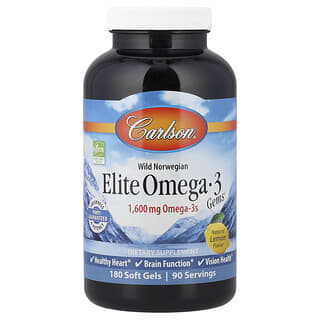
Where to buy: iHerb.cz
- IFOS + ConsumerLab — double verification
- TG form, good EPA:DHA balance
- Suitable for pregnancy (good DHA level)
- Small capsules, easy to swallow
- Requires 2 capsules daily
- Higher price
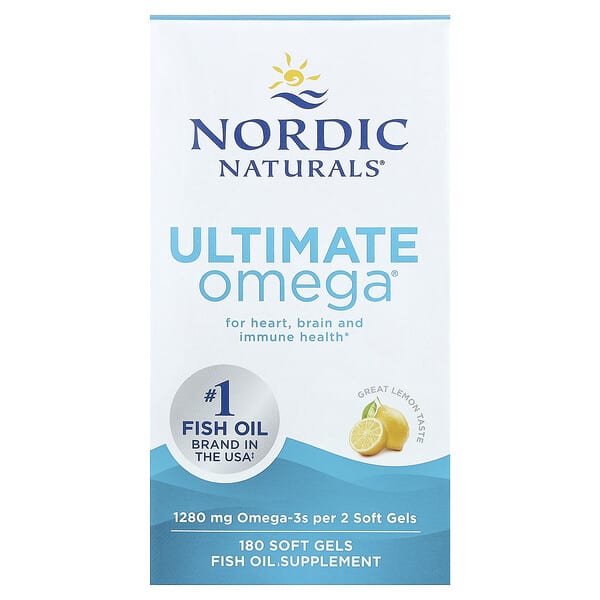
Where to buy: iHerb.cz, local stores
- TG form, good balance
- Widely available
- Good value for money
- No official IFOS certification
- Requires 2 capsules

Where to buy: BrainMarket.cz, Alza.cz
- IFOS + GOED — double independent certification
- Very high concentration (1610 mg per serving)
- DHA-dominant — excellent for brain and pregnancy
- Czech brand, locally available
- Contains vitamins D and E
- Cod liver oil — contains 60 mcg vitamin A per serving (this is low, but in pregnancy track total vitamin A from all sources; if uncertain, choose regular fish muscle oil instead of liver oil)
- Liquid form — not convenient for everyone
- Must be stored strictly in the refrigerator after opening
Popular, but with concerns
Why it's popular: Widely available in pharmacies (Benu, Lékárna Plus), Scandinavian reputation, heavy advertising.
Why I don't recommend it:
- Low concentration: only ~550 mg EPA+DHA per 2 capsules
- No IFOS, ConsumerLab, NSF
- No available analysis certificate
- For the price you can get an IFOS-certified product
Why it's popular: Slovak brand, good price, widely available.
Why I don't recommend it:
- No independent testing
- Manufacturer doesn't publish analysis certificate
- Unclear fish source
- Low price may indicate low quality
Why it's popular: Sports brand, active advertising, available on iHerb.
Why I don't recommend it:
- NOT IFOS certified
- Sports brand, not nutraceutical
- No analysis certificate
- Marketing over verification
What you can buy in Russia
The Russian market is challenging: Roskachestvo (2024) found that of 15 brands, 12 had labeling issues. So choosing here requires extra care.
Examples of supplements meeting the criteria
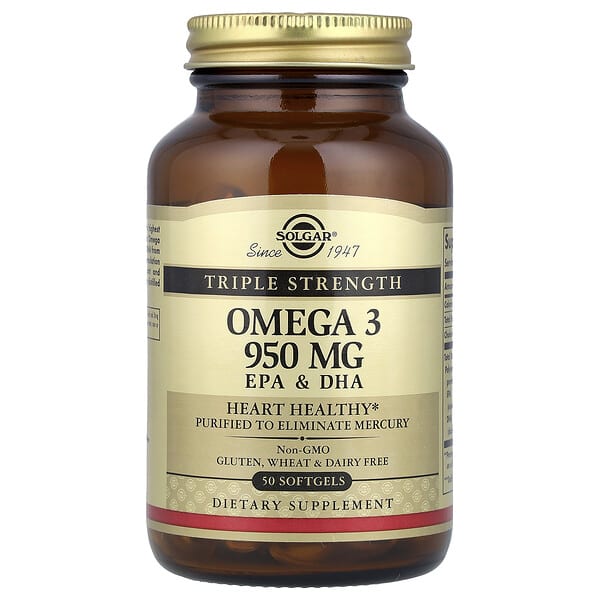
Where to buy: Official Solgar distributors in Russia, major pharmacies
- Good concentration (950 mg omega-3 per 1 capsule)
- Widely available in pharmacies
- Balanced EPA:DHA ratio (roughly 4:3)
- Molecular distillation
- More expensive due to import markups
- Need to verify authenticity (counterfeit risk)
- No IFOS certification
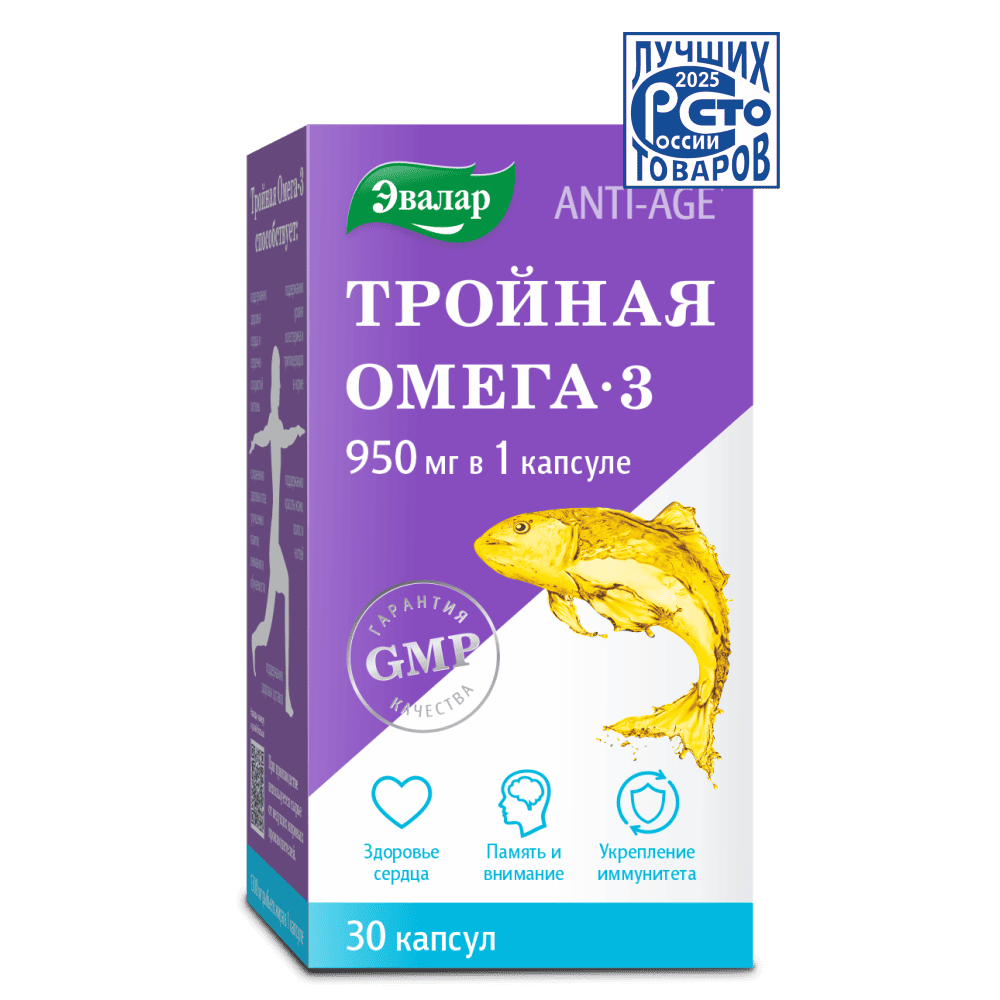
Where to buy: Pharmacies, vitamin shops
- Russian brand, quality control
- BASF Pronova raw material — best omega-3 source
- Best value for money in Russia
- European Pharmacopoeia certified
- Good EPA:DHA ratio
- EE form — absorption 15–20% lower than TG in acute studies, but difference diminishes with long-term use
- No IFOS, though BASF Pronova is quality material
- Analysis certificate not always available
Where to buy: iHerb, marketplaces
- IFOS-certified kd-pür® raw material (KD Pharma, Germany)
- TG form — natural, maximum bioavailability
- 80% concentration — one of the highest on the market
- 1 capsule daily = complete preventive dose
- Not sold in regular Russian pharmacies
- Price depends on shipping method
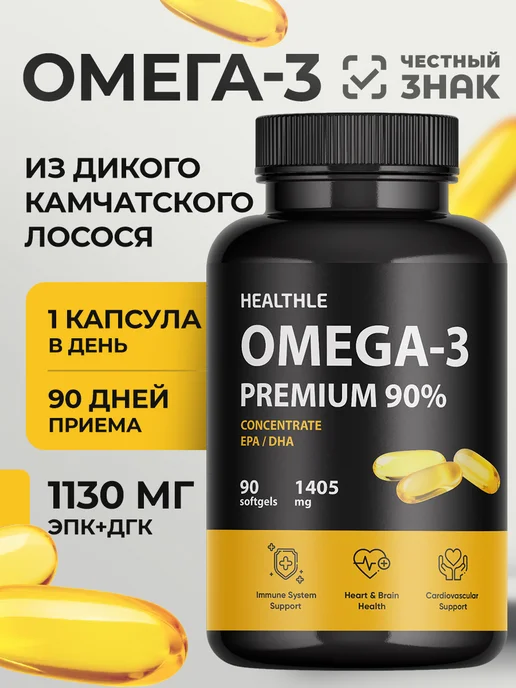
Where to buy: Ozon
- One of the highest concentrations on Russian market (90%)
- Excellent EPA:DHA balance (~1.2:1) — 1130 mg in 1 capsule
- Source: wild Kamchatka salmon bodies (not liver)
- 1 capsule daily — complete therapeutic dose
- Honest Mark
- No international certifications (IFOS, GOED)
- Form (TG/EE/rTG) not stated on package
- Niche brand, available mainly on Ozon
Popular, but with concerns
Why it's popular: Known Solgar brand, "complex formula" with three types of fatty acids.
Why I don't recommend it:
- Tiny concentration: only 115 mg EPA + 74 mg DHA per capsule (189 mg)
- Even at 3 capsules daily — only 344 EPA + 221 DHA = 565 mg
- Contains omega-6 (linoleic acid), which most people already have in excess
- ALA from flaxseed converts to EPA/DHA only 5–10%
- ~2500 rubles for 60 capsules (20 days at 3/day) — expensive for this formula
- No IFOS certification
Why it's popular: One of the best sellers, known German brand, affordable.
Why I don't recommend it:
- Minimal concentration: only 180 mg EPA + 120 mg DHA (300 mg omega-3)
- 2 times below the minimum
- Marketing vs. reality
- Better to choose Эвалар Тройная Омега-3 (780 mg for similar price)
Why they're popular: Very cheap (100–200 rubles), widely seen.
Why I don't recommend them:
- No data on actual composition
- No independent testing
- Unclear source
- Counterfeit risk
- Roskachestvo (2024): only 3 of 15 brands matched their labels
Why it's popular: Russian brand, active marketing, attractive packaging.
Why I don't recommend it:
- Extremely low concentration: only 80 mg EPA + 52 mg DHA (132 mg per capsule)
- 4–6 times below minimum preventive dose
- No IFOS, GOED, or other independent testing
- Actual cost per mg omega-3 higher than quality brands
Why they're popular: Fast delivery, discounts, convenient.
Why I don't recommend them:
- High counterfeit risk
- No seller quality control
- Expired products
Recommendation: Buy from pharmacies or Yandex Market from pharmacy sellers.
What you can buy in Cyprus
Cyprus is a small market with limited local choice, but quality supplements are available in pharmacies and online.
Examples of supplements meeting the criteria
Where to buy: iHerb.com (shipping to Cyprus 5–7 days)
- IFOS-certified kd-pür® raw material (KD Pharma, Germany)
- TG form, 80% omega-3 concentration
- 1 capsule daily — convenient
- Best value for money on iHerb
- Requires refrigeration
Where to buy: iHerb.com (shipping 5–7 days to Cyprus)
- Confirmed TG form — natural, like in fish
- High concentration: 1100 mg EPA+DHA per serving
- Balanced EPA:DHA ratio (roughly 3:2)
- iHerb shipping to Cyprus 5–7 days
- Requires 2 capsules per serving
- Refrigerate (especially in Cyprus heat)
Where to buy: iHerb.com (shipping to Cyprus 5–7 days)
- IFOS + ConsumerLab — double independent verification
- Norwegian wild fish, tested for 28+ contaminants
- Good EPA:DHA ratio (3:2) — suitable for most goals
- Requires 2 capsules per serving
- Refrigerate
Where to buy: iHerb.com (best value for money)
- IFOS 5 stars — maximum independent verification
- Best value for money
- TG form, good balance
- 1 capsule daily
- Requires refrigeration
Popular, but with concerns
Why it's popular: In Bwell and other Cypriot pharmacies, locally available (no shipping wait), ~€22–23.
Why I don't recommend it:
- Very low concentration: 180 EPA + 120 DHA (300 omega-3)
- 2 times below the minimum
- No independent testing
- For €20–25 you can order Life Extension with IFOS on iHerb
Why it's popular: NOW Foods is a known brand, available in pharmacies.
Why I don't recommend it:
- Low concentration: 180 EPA + 120 DHA
- NOW Ultra version is better but no IFOS
- Better options exist
Why they're popular: Cheapest, widely seen.
Why I don't recommend them:
- No composition information
- Complete lack of transparency
- Quality risk
Conclusion: iHerb ships in 5–7 days, you'll get transparency.
Frequently asked questions
Yes. The most precise method is the Omega-3 Index blood test. It measures the percentage of EPA and DHA in red blood cell membranes and reflects your actual omega-3 status over the last 2–3 months.
Target ranges (Harris & von Schacky):
- Optimal zone: > 8% — cardiovascular protection, brain health, good systemic health
- Intermediate zone: 4–8% — most Europeans and Russians are here
- Risk zone: < 4% — associated with elevated cardiovascular event risk
The test allows you to personalize dosing (some need 500 mg, others need 2000 mg — depends on metabolism, diet, and supplement form) and objectively assess effectiveness after 3–4 months. Available at labs like Invitro, Helix, and similar.
Sources and recommended reading
- GOED Voluntary Monograph (2022) — primary source on omega-3 dosing
- Dyerberg J et al. (2010) — classic omega-3 review
- Bhatt DL et al. REDUCE-IT trial (2019) — NEJM. Study on high-dose EPA and arrhythmia risk
- Manson JE et al. VITAL trial (2019) — NEJM. Large study. Mixed results
- FDA Omega-3 Guidance (2019) — maximum recommended dose 5 g/day
- EFSA Opinion on Omega-3 — confirms safety up to 5 g/day
- Roskachestvo (2024) — omega-3 study on Russian market. Of 15 brands, 12 had labeling issues
- IFOS (International Fish Oil Standards) — fish oil quality standard
- Neubronner B et al. (2011) — "Fish oil and its anti-inflammatory effects"
- American Heart Association Recommendations — current cardiology guidance